Makers Workshop Featured in The Advocate for ‘Lynchburg at War’ Documentary
Lindsey Shiflett Smith featured in The Advocate newspaper as a Baton Rouge-based artist, highlighting her work on the Lynchburg at War documentary and Makers Workshop creative projects.
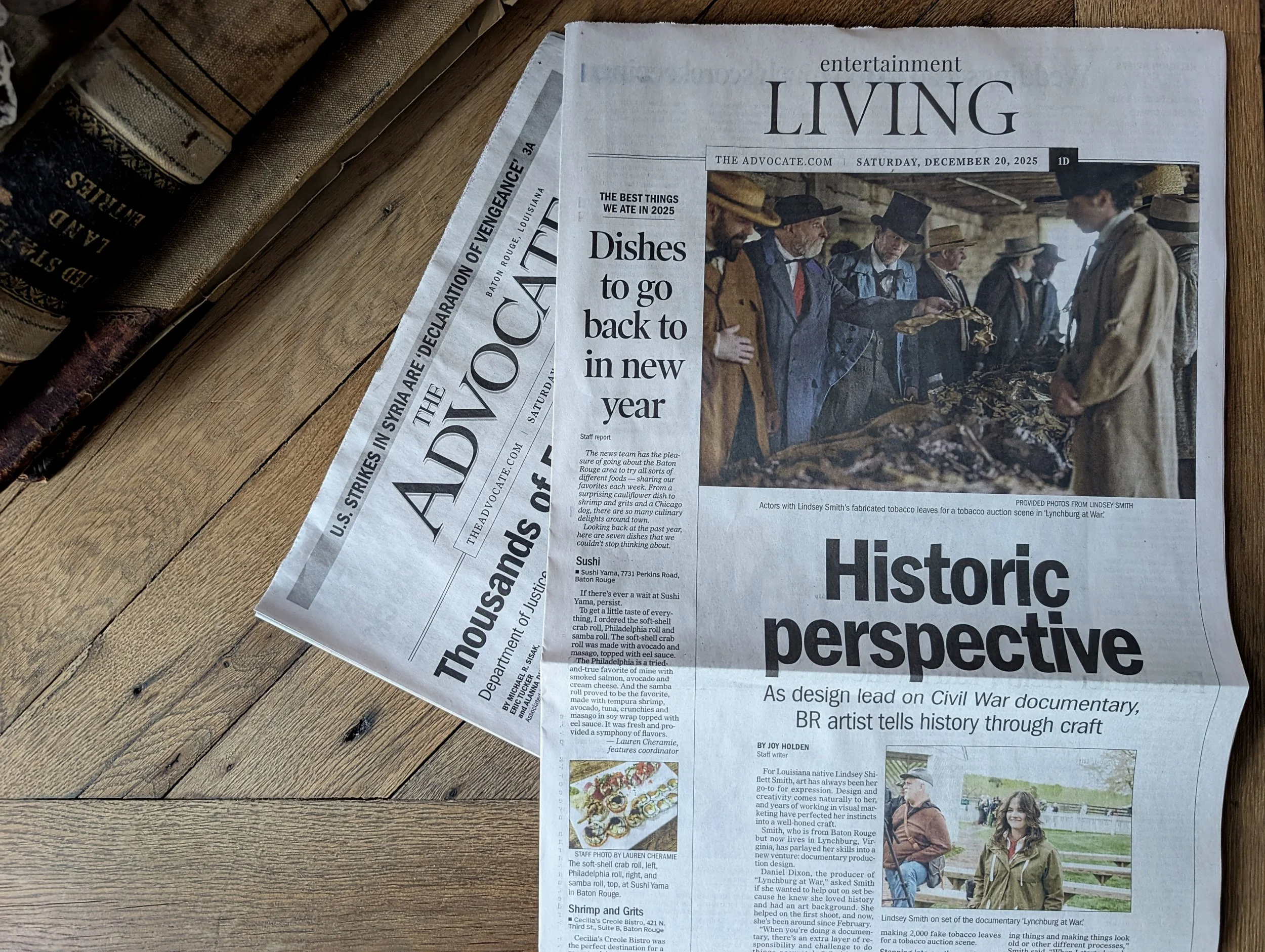
I am thrilled to share some exciting news — Makers Workshop was recently featured in The Advocate newspaper for our work on Lynchburg at War, the historical documentary project that has been at the heart of our creative journey this year. This recognition means so much to us as The Advocate is one of Louisiana’s most respected publications, known for spotlighting compelling stories in culture, life, and the arts. This is a reminder that art isn’t just about self-identification; it’s about showing up, creating, and letting your work speak. For me, that journey has intertwined deeply with the makers and stories I celebrate through my work at Makers Workshop and on projects like Lynchburg at War.
Bringing History to Life Through Craft
For months, I have been fully engaged in the Lynchburg at War documentary — a richly detailed project that explores the everyday lives of people in Lynchburg, Virginia during the Civil War. This isn’t just another history film. It’s a passion project fueled by archival research, craftsmanship, and deep respect for untold stories from the past.
Our role has extended far beyond traditional filmmaking. From historically accurate wardrobe work and handcrafted props to set design rooted in period authenticity, every element has been intentionally made by hand — guided by the same philosophy that defines Makers Workshop: slow, intentional, and deeply human work.
Why This Story Matters
What makes Lynchburg at War especially meaningful is its focus on the people behind history — not just battles and dates, but the individuals whose daily lives were shaped by war. The film highlights stories of caregivers, workers, and community members whose contributions have often been lost in broader historical narratives.
Being featured in The Advocate for this work is a powerful reminder that storytelling — especially when done with care and craft — still resonates. It validates what we’ve always believed at Makers Workshop: that the process is just as important as the product, and that thoughtful creative work deserves to be recognized.
Craft, Community, and Collaboration
This project has reminded us that important work rarely happens in isolation. Lynchburg at War has grown through collaboration with historians, reenactors, artisans, and neighbors who shared time, knowledge, and passion with us. That collective effort is what truly brings history into focus - not just as something to observe, but something to experience.
We’re deeply grateful to The Advocate for amplifying this piece of our story and to everyone who has supported this journey so far. The documentary continues to evolve as we prepare to share it more broadly and we can’t wait to see where it goes next.
Makers Workshop Featured in Lynchburg Living for ‘Lynchburg at War’ Documentary
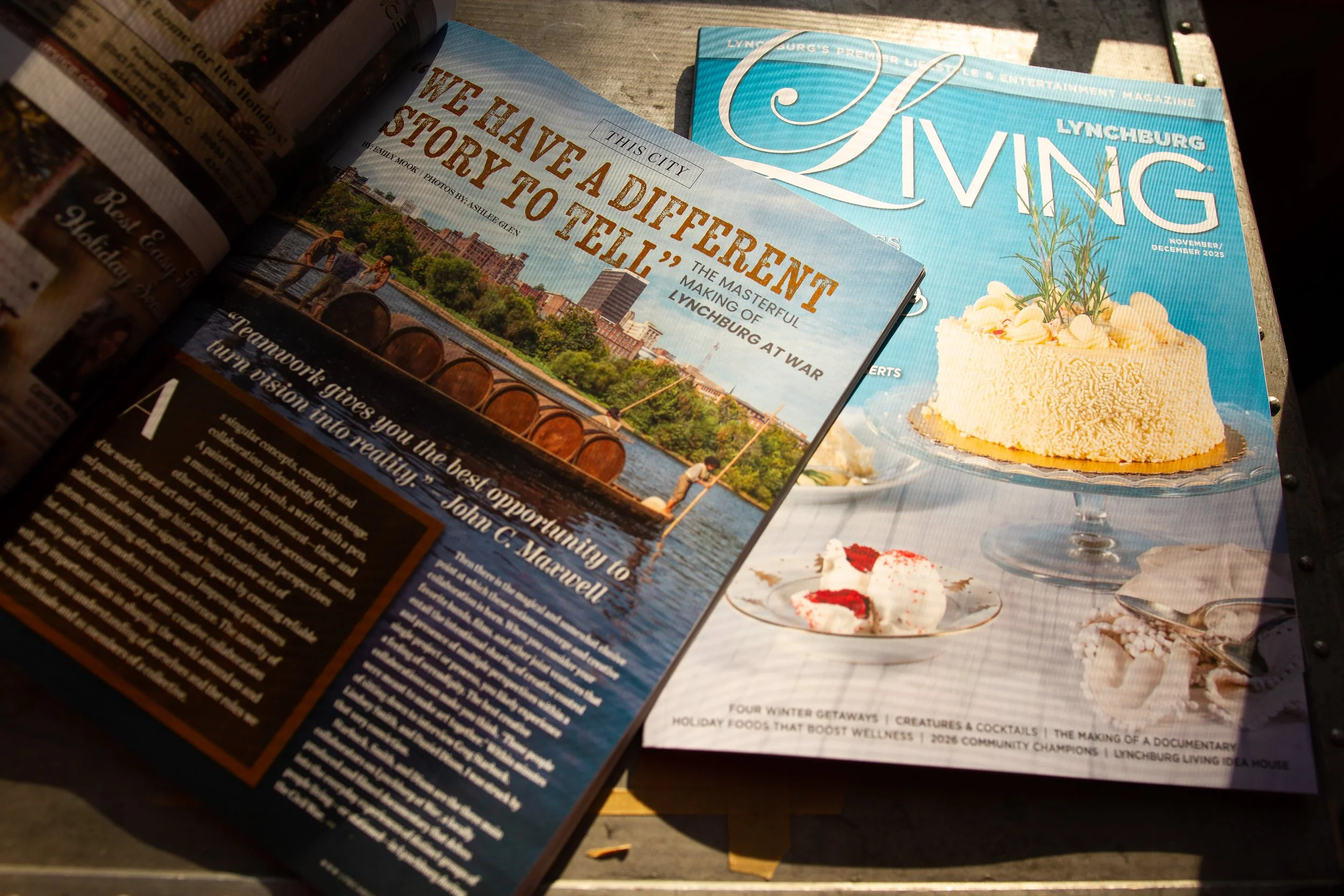
There are moments in a long creative journey that feel like quiet confirmation—like a nod from the community that says yes, this matters. This month, Makers Workshop was honored to be featured in the November/December issue of Lynchburg Living Magazine in their story, “We Have a Different Story to Tell.” The article spotlights the vision, dedication, and historical curiosity at the heart of our ongoing documentary project, Lynchburg at War, and it was a privilege to see our work recognized in both print and digital form.
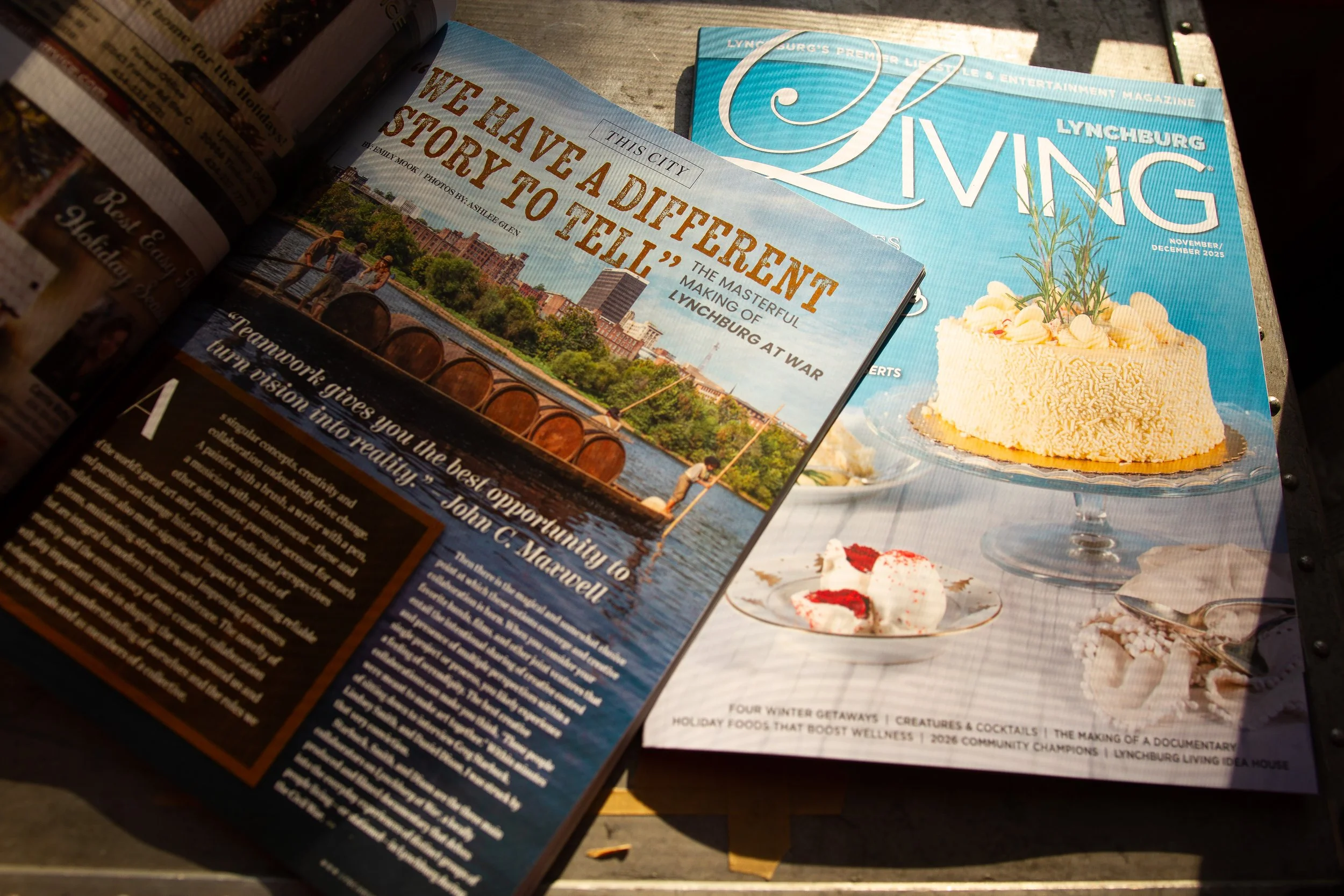
For the past year, our team has been immersed in a world of archival research, handcrafted set pieces, period accuracy, and local storytelling. What began as a simple desire to explore overlooked stories of the Civil War era quickly became something much larger—a community-sized project that pulls from the skills, passions, and lived knowledge of people throughout Central Virginia. Being featured in Lynchburg Living felt like a natural extension of that community spirit. The magazine has long championed local makers, artists, and storytellers, and their interest in our work speaks to the cultural relevance and human depth behind this documentary.
The article dives into why Lynchburg at War is not just another retelling of the past. It highlights the lesser-known narratives—the women who built hospitals, the workers who kept the city functioning under strain, and the everyday citizens who shaped wartime Lynchburg more quietly than the battlefield generals history tends to remember. As Lynchburg Living noted, our goal is to give voice to these stories with accuracy, artistry, and respect.
For Makers Workshop, this feature is more than a recognition of our filmmaking. It reflects the full ecosystem of craft that makes our work possible. From sewing accurate period clothing to building props by hand, from photographing behind-the-scenes moments to preserving historical textures through film—every piece of the project is rooted in the same philosophy that guides everything we create: slow, intentional, heritage-minded work. Having that approach acknowledged in a regional publication means a great deal to us.
We’re also incredibly grateful that the magazine highlighted the collaborative nature of the project. Lynchburg at War is not created in isolation. It is powered by historians, reenactors, makers, artisans, local venues, and a community willing to show up, stand in the cold before sunrise, lend their knowledge, or step into a scene to bring 19th-century Lynchburg back to life. This feature honors all of them.
If you’d like to read the full article on Lynchburg Living’s website, you can find it HERE or pick up a physical copy around Lynchburg, VA.
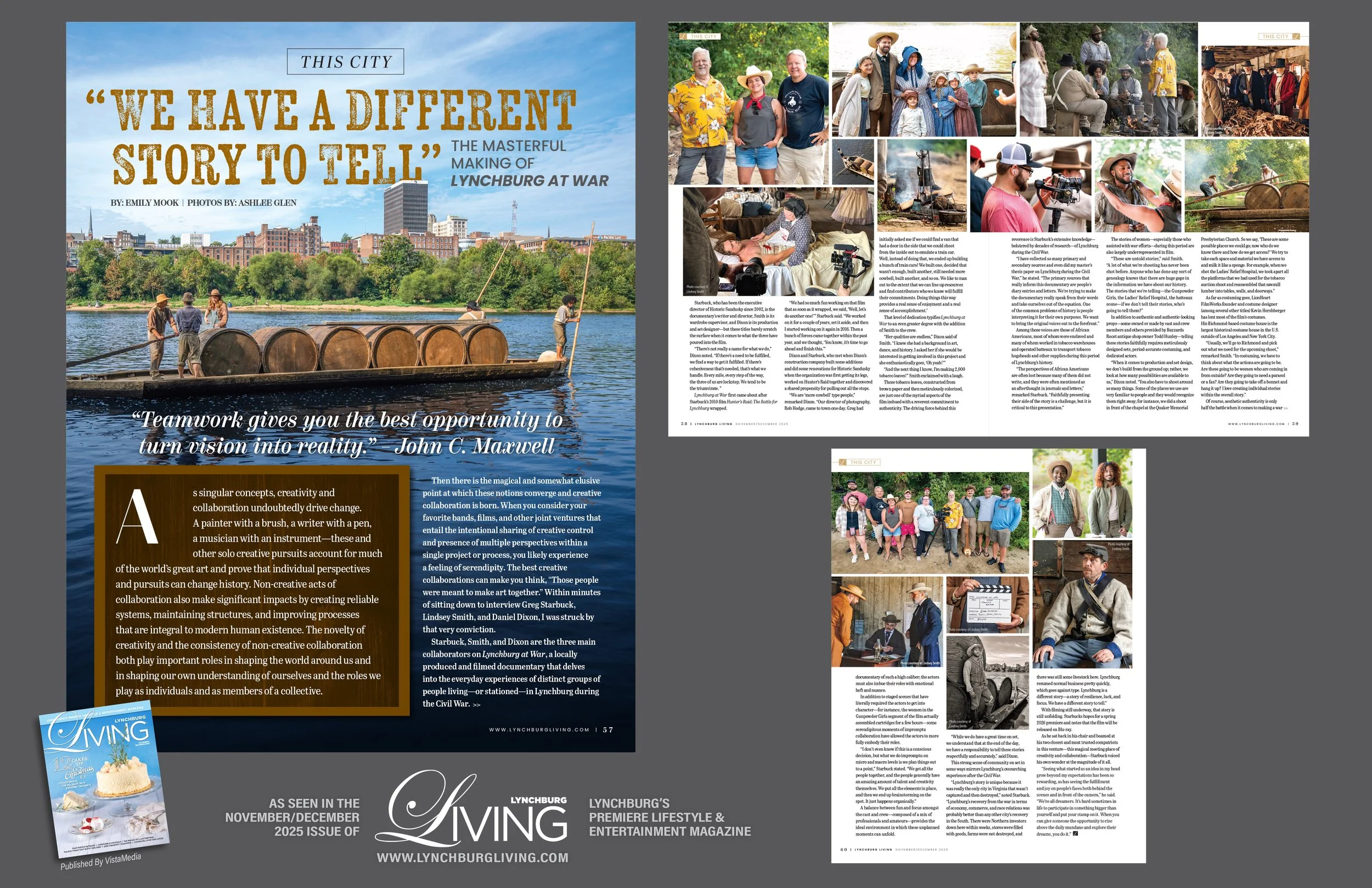
We’re grateful to the editor, Megan Williams, and writer, Emily Mook, at Lynchburg Living for their thoughtful coverage and for recognizing the heart behind this project. As we continue filming, researching, and building the world of Lynchburg at War, we hope this documentary continues to shine a light on the stories that deserve to be remembered.
Thank you for supporting Makers Workshop, for sharing our work, and for helping keep handcrafted storytelling alive in Lynchburg and beyond.
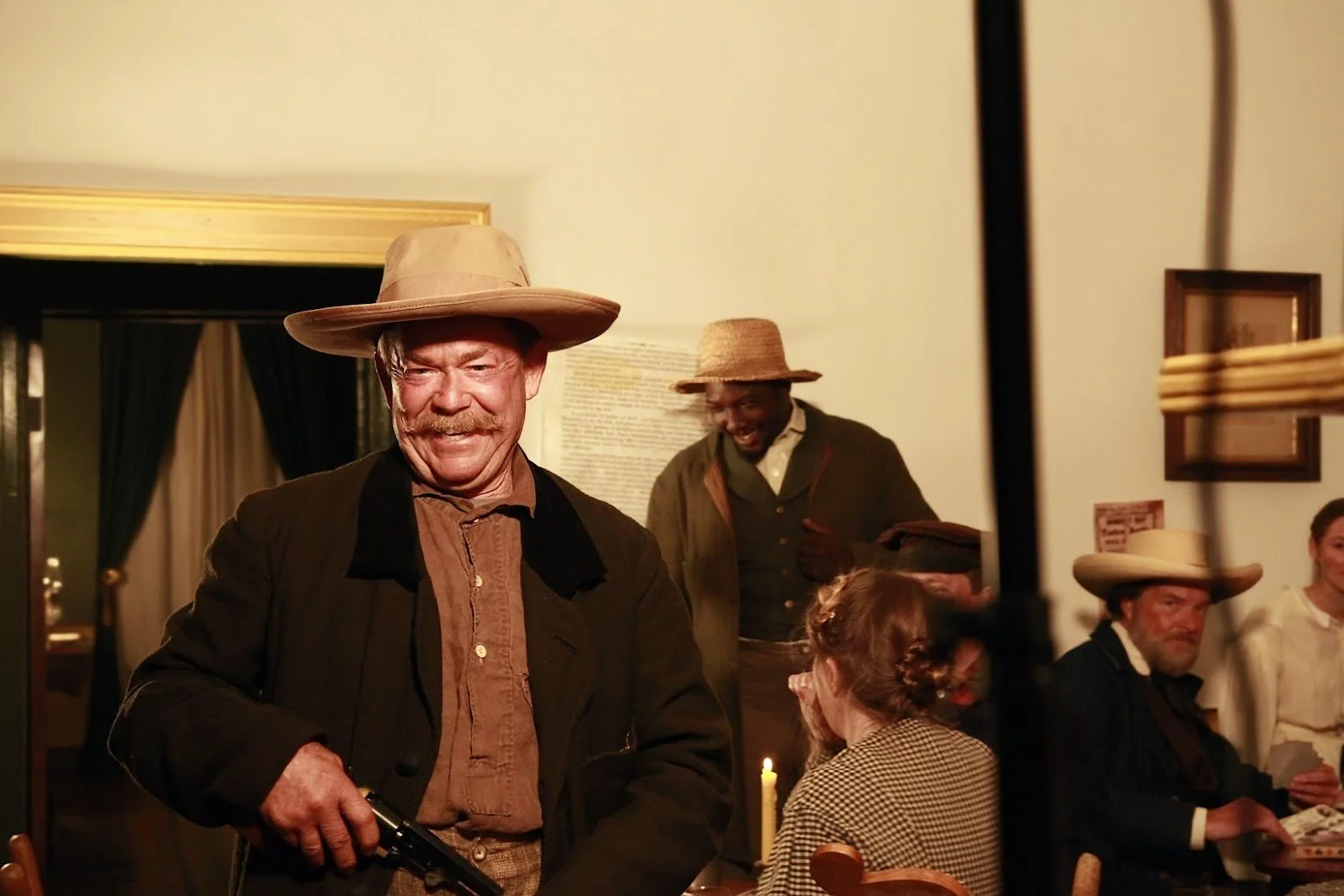
Lynchburg at War: Buzzards Roost
Explore our Buzzards Roost portrait series from the Lynchburg at War production, featuring historical costuming, handcrafted props, and detailed period styling. Shot in Lynchburg, Virginia, this collection highlights our work in photography, set design, casting, and collaboration with expert artists to recreate the city’s gritty 1800s past with accuracy and artistry.
In the mid-1800s, Lynchburg’s Buzzards Roost was the city’s rowdiest, rough-edged district—a tight maze of boarding houses, saloons, brothels, and back-alley commerce that pulsed late into the night. River men, laborers, and travelers crowded the streets, drawn by gambling tables, cheap whiskey, and the thrill of cockfights held behind taverns. It was a place where fortunes were won and lost in minutes, where women working in brothels carved out a living on the margins, and where the constant rumble of trade from the riverfront fed an economy of vice as much as necessity. Gritty, smoky, and alive with noise, Buzzards Roost was both the heartbeat of Lynchburg’s working class and the city’s most notorious playground—an unforgettable slice of 19th-century life.
For this shoot, I handled (along with our team) set styling, costuming, makeup, photography, casting, and helped build the fire-cresset props to help shape the gritty, atmospheric look of the scene. Photographed in Lynchburg, Virginia, these portraits highlight the character, texture, and storytelling at the heart of Makers Workshop. If you’re looking for heritage-inspired photography, historically grounded visuals, or handcrafted production work in Virginia, this collection captures the craftsmanship and depth that define my approach.


We were honored to work with Alistair McPherson, a Scottish-born special-effects and prosthetics artist, on this shoot. McPherson earned his stripes early on as a prosthetic technician on Hellbound: Hellraiser II. After years in the UK, he later resumed his work in the U.S., bringing decades of experience and a finely crafted eye to every project. Our film also features costumes from Historical Wardrobe, a Richmond, VA–based film-costume house whose inventory spans centuries with meticulously researched and tailored historical dress. Historical Wardrobe was created by Kevin Hershberger, an Emmy-nominated director, producer, screenwriter and founder of LionHeart FilmWorks.


Enjoy this Behind the Scenes clip from Dlearyus Media.
Director — Greg Starbuck
Producer — Daniel W. Dixon
Primary Camera — Chloe Shelton Films
Secondary Camera — LionHeart FilmWorks
Third Camera — Dlearyus Media LLC
Makeup Lead — Alistair McPherson
Makeup Artist — Lindsey Shiflett Smith
Fire Cresset Props Fabrication — Dwayne Phillips, Daniel W. Dixon, Lindsey Shiflett Smith
Costumes Provided By — Historical Wardrobe
Animal Handling & Livestock Provided By — John Bare and Cody Williams
Filmed On Location At Historic Sandusky Museum, Point of Honor Museum

Woolrich x Target: what does it mean for heritage brands?
The Woolrich x Target collaboration raises big questions for heritage brands. What does it mean for a label known for quality craftsmanship? Can a long-standing brand maintain its reputation while reaching a mass audience? In this post, we explore the balance between heritage and accessibility, asking what collaborations like this mean for the future of American-made, well-crafted apparel and goods.
I recently shared a carousel on Instagram highlighting the Woolrich x Target collaboration, a mix of heritage craftsmanship and modern accessibility. As a Lynchburg brand photographer who loves documenting quality made goods, I wanted to explore what this collab means for a heritage brand like Woolrich, which has been making durable, trusted apparel since 1830. The post has been sparking some thoughtful conversations about how classic brands evolve while staying true to their roots.
To see the full carousel, including close-ups of the pieces and my take on the collection, head over to my Instagram @makersworkshop. It’s a great way to connect, follow along for more behind-the-scenes looks at heritage brands, and join the discussion about craftsmanship, design, and modern collaborations.

Lynchburg at War: Train station shoot
In a powerful reenactment at Lynchburg’s Old City Cemetery train station, the Lynchburg at War team brought to life a pivotal moment from the Civil War era: Lucy Mina Otey’s courageous journey to Richmond to petition President Jefferson Davis for permission to establish the Ladies Relief Hospital in Lynchburg.
Lucy Mina Otey’s Bold Journey to Establish the Ladies Relief Hospital
In a powerful reenactment at Lynchburg’s Old City Cemetery train station, the Lynchburg at War team brought to life a pivotal moment from the Civil War era: Lucy Mina Otey’s courageous journey to Richmond to petition President Jefferson Davis for permission to establish the Ladies Relief Hospital in Lynchburg. This hospital, founded in 1862, became a beacon of compassion and efficiency, boasting the lowest mortality rate among hospitals.
Our recent film shoot aimed to honor this remarkable chapter in history. With meticulous attention to period-accurate costuming and staging, we recreated Lucy Otey’s departure to Richmond, capturing the essence of her determination and the era's atmosphere. These images not only pay homage to Otey’s legacy but also highlight the critical role women played in Civil War medicine.


Red Wing Work x F.l. Showalter
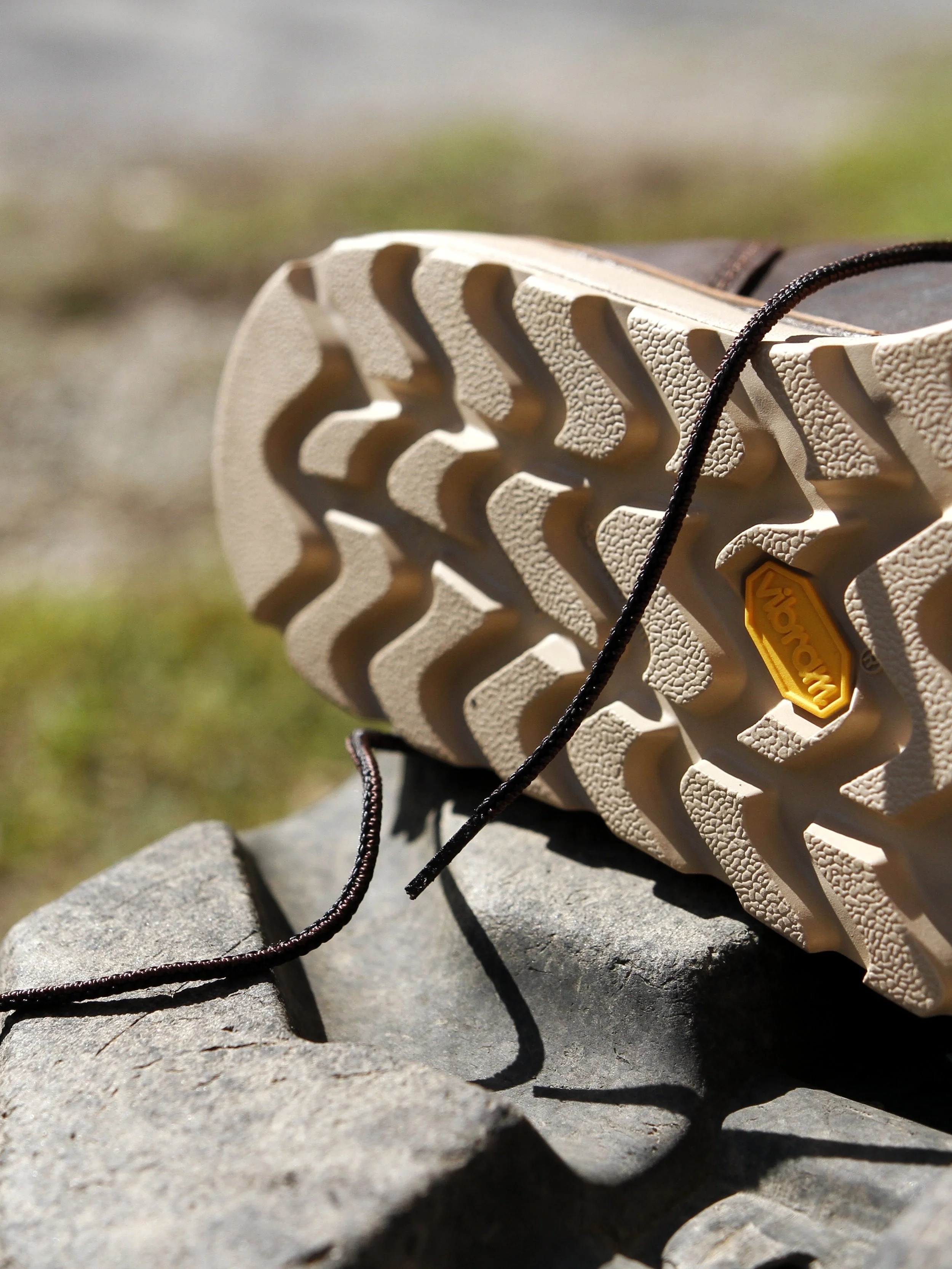
At the F.L. Showalter Company Picnic in Lynchburg, Virginia, I spent the day photographing the people and products that keep this town running. Red Wing Work was there, showcasing their newest lineup of work boots—the Apex with the BOA® Fit System, the Traction Tred, and the King Toe—each built for comfort and endurance on the job.
At the F.L. Showalter Company Picnic in Lynchburg, Virginia, I spent the day photographing the people and products that keep this town running. Red Wing Work was there, showcasing their newest lineup of work boots—the Apex with the BOA® Fit System, the Traction Tred, and the King Toe—each built for comfort and endurance on the job. As a Lynchburg brand photographer, I had the chance to capture these boots in their element. Red Wing has been crafting dependable footwear since 1905, and seeing that tradition continue today reminded me why I love documenting American craftsmanship through Makers Workshop. Seeing Red Wing and F.L. Showalter, one of the oldest continuously operated construction companies in the Commonwealth of Virginia, side by side felt like a perfect pairing—two brands built on reliability, skill, and pride in the work itself. It was a day rooted in community, heritage, and the enduring value of well-made things.